Ace Sim RC presents:
=JSF=
Jet Street Fighter - for much more than just slow flying!
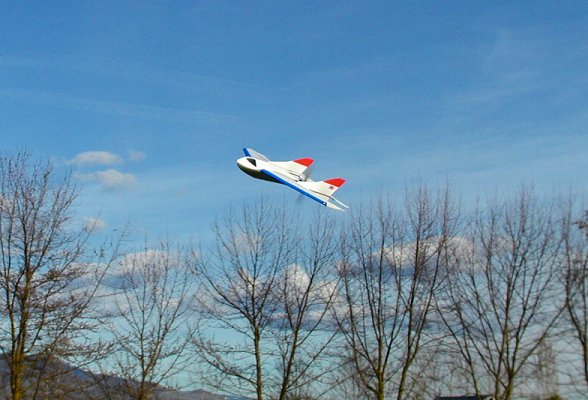
Our slow flyer goes fast too!
Complete construction guide available
(updated 04-07 with brushless motor videos)
JSF SPECS
Span - 30"
Length - 23"
Area - 2 sq. ft.
RTF weight tested - 10 to 15 oz.
Motors tested:
GWS IPS "A" w/ 9x6 APC sf
IPS "S1" drive w/ 8x6 APC sf
homebuilt dual motor IPS "A" w/ 10x7 APC sf
Batteries for IPS motors above - 7 cell 700mah NiMH Maxell AAA packs
Other motors tested:
Johnson 250 (Goldmine) w/ MJ 5:1 BB GB - 9x6 APC sf - 6 cell 600AE's & 7, 8 cell 700 Maxells
Simprop Power "350+" System - S300 - 5:1 - 8x6 APC sf - 8 cell 600AE's
NEW! Komodo brushless outrunner 15 turn w/3S 1100 LiPo pack & 8x4 GWS DD prop
Radio - GWS R4PJ with 2) HS-55 servos
Spektrum DX-6 system
Speed Controls:
ESC - GWS GS-100 (w/brake)
Brushless - Castle Creations Phoenix 10 or Thunderbird 9
Wing loading tested - 5 to 7.5 oz per sq. ft.
HOT! - Want a real thrill? Try one of the new CD-ROM or other light brushless motors and LiPolys packs on your JSF!
Not only will you reduce the RTF weight even more, but increase power as well.
(See new videos below)
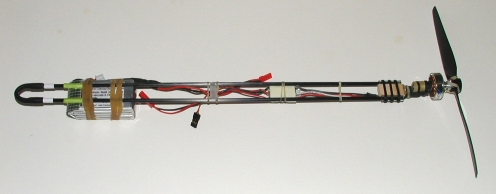
Komodo brushless outrunner single 15 turn with 3S 1100 LiPo and 8x4 GWS DD prop. WOW! (see video below)
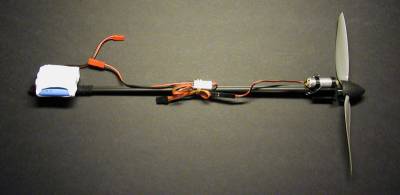
IPS drive typical w/ 7 cell 700ma NiMh Maxcell AAAs (5.2 ozs)
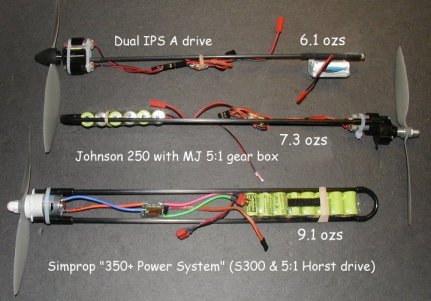
From top to bottom:
Dual IPS w/ 7-cell
Johnson 250 w/MJ 5:1 w/ 6-cell
Simprop w/ 8-cell
(weights are less plane)
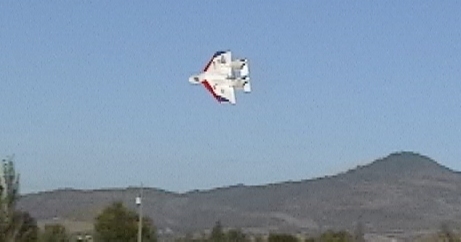
NEW & HOT! - Need for speed brushless video clip on taileron model - JSF-1006-Sclips.mpg
This is from the little 1 oz CDRom style motor above - imagine the performance with a larger BL motor!
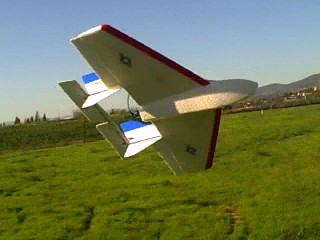
(04-07) Here's my original Super Sport model (with ailerons) with the same power setup as above:.
Talk about a roll rate!
jsf-bl-407-s.wmv (small 320x240)
jsf-bl-407.wmv (large 640x480)
(animated preview clips - allow to load to view)
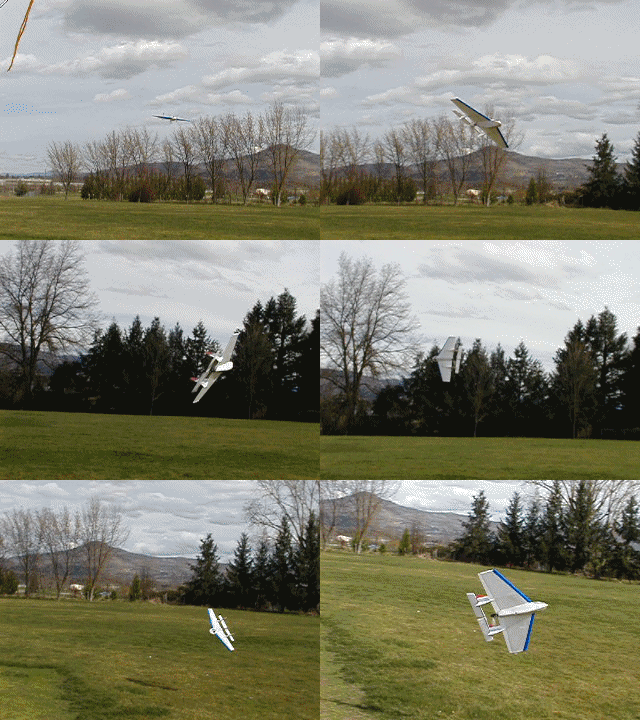
IPS powered slow flight typical "IPS-CLOSE" mov clip (4.5 megs)
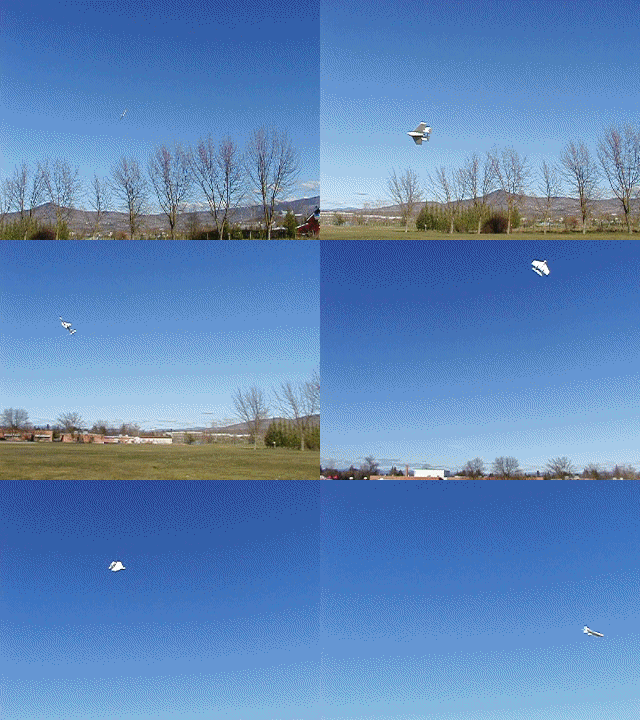
Typical IPS performance "IPS-JSF" mov clip (7 megs)
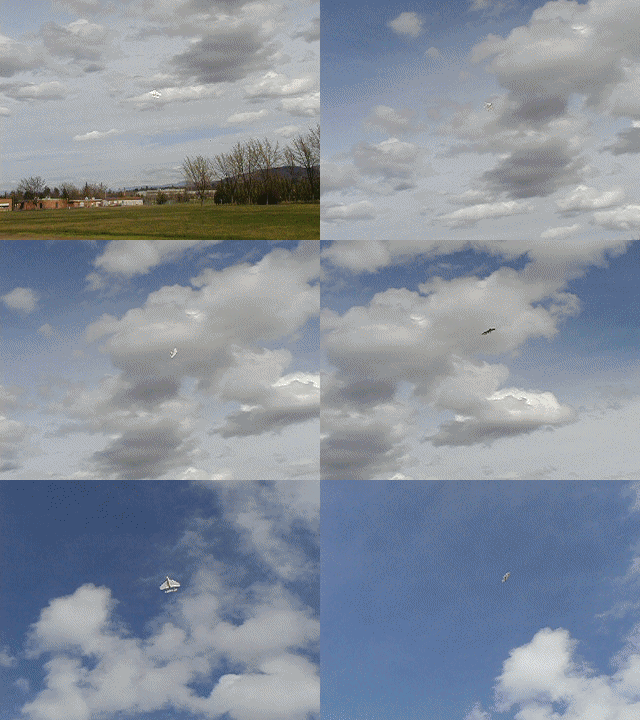
Ballistic 300 geared performance "S300-JSF" mov clip (6 megs)
(more videos below)
Looks like a jet, sounds like a jet, (sort-of from the gear box or BL motor whine) and until the prop stops turning, no one knows it's not :)
AND CAN EVEN FLY LIKE A JET (see top brushless mpg or older S300 mov clip above)
JSF will fly fast (for an IPS A drive powered slow flier), and it will still fly really slow. It can easily ROG easily with tri-gear or you can leave the gear off and hand launch it with a gentle toss, hit the juice and blast off.
Using a typical GWS flight pack and servo mixing, the all flying "tailerons" double for elevator and aileron control. They act alot like the elevons you may be used to on your Zagi, Wally Wing, or other flying wing, but much milder and since the prop blast is over the control surfaces, you get the advantage of positive control well below normal flying speeds. With the higher powered motor systems (Johnson 250, geared S300, etc.), I'm experiencing performance better than any S400 plane I've flown!
CONSTRUCTION
Construction is from a couple sheets of Sturdyboard brand foam board from Walmart with the paper removed by soaking in warm water for a few hours. The wing is double surface and started out flat bottomed but changed to semi-symmetrical due to its nice inverted ability. The surfaces are just taped together with foam spars installed vertically inside with double sided tape. There are no ribs used. This makes for a very strong and light wing that will take a lot of aerial and ground contact abuse without damage. Repairs if ever needed can be usually done with just tape at the field for those "serious" crashes, or back at the shop with white glue or epoxy if you do something stupid like step on it.
The motor rails and tail booms are from CF tubing or wood dowels. The booms fit into plastic straws that are installed into the wing during construction to allow quick and easy tail removable for transport or storage. Another thin CF rod or bamboo skewer is used as the control surfaces "axle" and it is snug fit into fittings on the ends of the booms. The axle slip fits through sleeves taped to the foam control surfaces for the control hinge. The front tops of the verticals lock into notches in the wing holding the booms securely in place during flight.
Mini Dubro hardware is used for the control hookups from the internal or removable mounted wing servos and run along the verticals and attach to the control horns on the top of the surfaces for positive tension during pitch-up loads.
The battery pack is Velcroed to the "stick" which lays under the wing. This "stick" is held to the wing with a rubber band hooked under the protruding front of it, over the wing and at the rear to the motor drive that sticks up through a notch in the TE to keep it centered. The receiver stays safe in the wing with an extension to the ESC sticking out. One connector and a rubber band and you can swap out entire power systems.
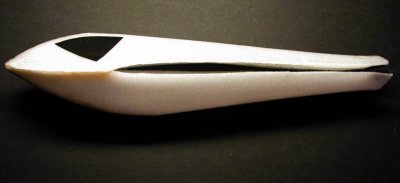
The fuselage is made from soft open-celled packing foam sheeting cut to shape in two pieces and glued together at the nose. It's pulled over the front of the wing and Velcroed on at the TE at the top and bottom. The gear stays nice and safe internally but is easily accessible when needed. "Nerf" plane anyone?
FLIGHT
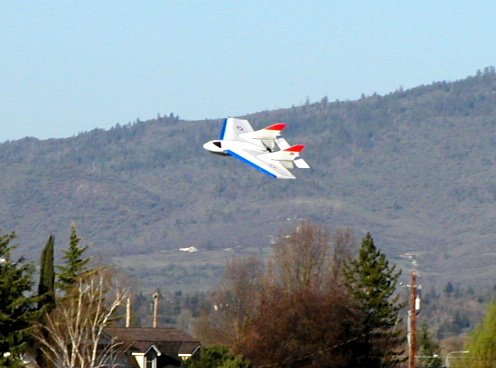
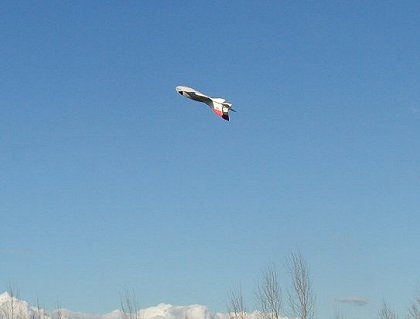
The JSF is as stable as any R/E plane I've ever flown. It turns almost like it has ailerons however with no adverse yaw tendencies. In fact, with the prop blast on the tailerons, even at post stall airspeed it'll just pivot around itself in the yaw axis with no tendency to stall or spin. A provoked no-power stall is straight ahead with very little if any loss of altitude. It's more of a nose bob than a stall. A provoked power-on stall isn't even that. Just a dip of the nose and the climb continues. A typical landing can be done at almost zero airspeed. Just slow it way down and plop. I'm not saying that the stall speed is zero or anything, but I believe that this semi delta type design may allow post stall lift to be created from it's vortices from what I've read about such things.
Handling is similar to a flying wing in nature but without the bad habits most of them exhibit. Due to the low airspeed, the control actions in roll have some lag time but I've gotten in the habit of lowering the nose prior to initiating a turn for faster response. Turns are naturally coordinated at normal airspeeds, more on the rolling side at faster speeds, and having more yaw than roll on the slow end. This is handy when setting up a slow approach close to the ground when the last thing you need is to have to bank a wing up to turn her. I feel this setup is the perfect transition from R/E to ailerons, or to an elevon wing. "Not quite as good as ailerons, but a heck of a lot better than a rudder."
At the present time on the IPS drive, I've managed to climb inverted, do loops from level flight and all the zooming fun stuff like wingovers, split-S, Immellmanns, etc. To be able to do all this in a very confined space is really exciting.
2/02 UPDATE: With the Simprop Power System added, I'm amazed at the performance! I knew it would go fast, but she still slowed way down and a landing was still just not much more than a plop at my feet. I've gotten good enough recently that I can catch it almost every time. Since I can still fly around at 1/3 power easily within an infield plus punch it and go vertical for 100 feet and almost "hang" (stand?) on the thrust, I may never go back to IPS for outdoor flying. :) ((I stand corrected! See below for the mini SC stunt wing for IPS drives - it's wild!))
NOW I may be able to learn that Cobra maneuver....
3/02 UPDATE: I tried smaller verticals and elevons for control with great success. Weight is down some and roll performance is way up. With the S300 system she'll prop "stand" for a while and the speed is very impressive! I call this version the SC "Super Cutlass" due to the similarity of the early Navy jet fighter. I'm now envisioning a whole line of "Jet Street Fighters"! :)
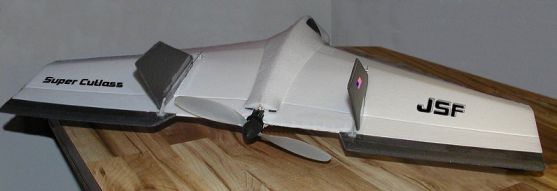
4/02 UPDATE: I originally not only wanted the JSF to be both a trainer and a flying stunt wing, but a full-out sport plane with ailerons. I first tried to make an A/E model from the Taileron Trainer (TT) by cutting in ailerons, using torque wires to connect them to one wing servo, and link the tailerons together and run it from the other wing servo. This way the same basic wing design could be used along with the standard wing servo positions. I got it working but then realized that instead of just an A/E model, why not go all the way, add a third center aileron servo with torque wires and retain the stock tailerons as ruddervators? Much less complex but even more versatile and I don't have to change the tails. Not only that, but if you don't have a 4 channel radio with mixing, you can still fly it as a Super Sport (SS) A/E ship by connecting the two taileron wing mounted servos together with a Y connector! Now we're talking true multi-role fun!
6/02 update: Testing of the SS "Super Sport" aileron model is complete. Roll response is SUPER FAST and with the 250-300 size power systems, the JSF will do just about anything you want it to.
See for yourself - in 15 mph gusty winds even!

10 meg .mov clip
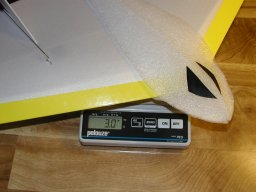
6/02 update: The latest variation is the SC junior. A 24" span scaled down JSF Super Cutlass version that only weights 3 oz less motor/battery/esc but including GWS receiver and 2 HS-55 servos!
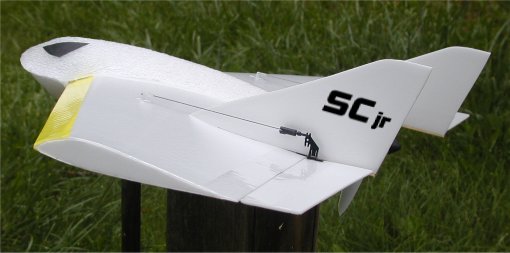
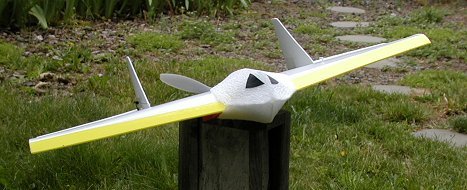
Tested with IPS S1 motor and 8x6 APC SF prop with 7- 700mah Maxells
Span = 24"
Root = 11"
Tip = 6"
RTF weight = 7.8 oz
Area = 204 sq in.
w/l = 5.5 oz per sq ft.
Performance is very acrobatic yet still mild mannered at the slow end. What a great speed range! The short span allows for a blinding roll rate. The wide chord gives nice pitch damping and she still remains stall proof. I can hold full elevator in a 360 around me at about a 5-6 ft radius circle at 1/2 throttle. It takes it about 2-3 seconds per revolution. With full throttle it will do 2 rolls on the vertical up line from a running start. Big inside and outside loops from level, inverted climb at 1/2 throttle, etc. Still to be tested with 5 and 6 cells for an even lighter yard flyer. Should be a perfect size for the Qualcomms cells also.
Anyone coming from IPS powered rudder slow flyers should really build one of these as the best transition into ailerons, flying wings, and aerobatics. I only wish I had something this durable and inexpensive way back when I was learning.
BUILDERS:
Build the SC jr. the same as for the SC in the construction guide but reduce spar and fin sizes by about 30%. Use the above dimensions for the wing layout and retain the same sweep angle.
Use either the thin 1/8 thick stripped foamboard or .100-.120 in. type 1 Zepron or 3mm Depron. Space fins at 10" and use 1/8" sheet packing foam for the fuse using your templates but scaled down. Thin bamboo skewers with cocktail straws or hollow stir sticks are used the same way as shown for the full size SC in the guide for the fin mounting. This plane took me all of 2 hours to complete without any plans and most of that was thinking about it. If you are not quite satisfied with the performance of your JSF with only an IPS drive, throw a 280 or more in it and whip up one of these for that IPS. You're going to love it!
SC Jr super-stunt video is here!
See what the little GWS IPS S1 drive w/ 8x6 APC sf prop & 7) Maxell AAAs can do.
Plus, you get about 15 minutes worth of action at full throttle!
(12 mb)
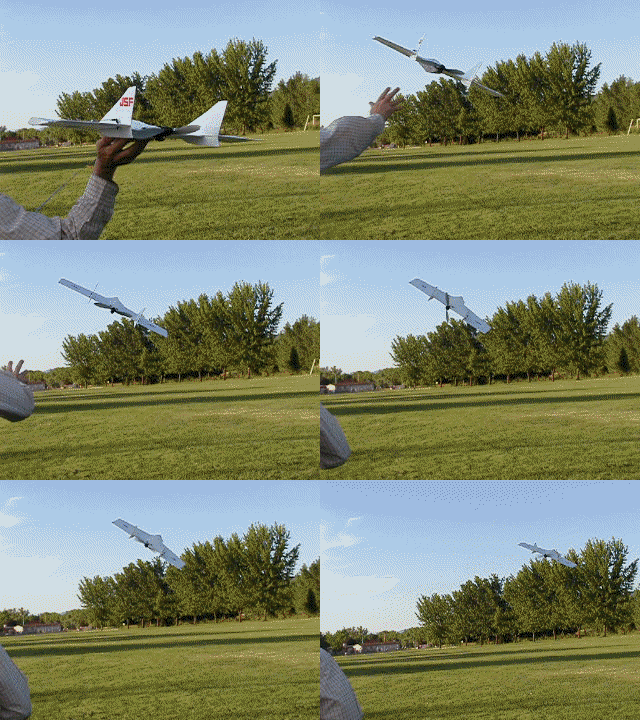
SC-Jr-Stunts-S1.mov
We've got axle and barrel rolls, big loops, climbing inverted downwind....etc.
And this was all with the wind at 5-10 and switchy and me not knowing what I'm doing yet!
This is just too much fun!
6/21 UPDATE: The complete construction guide including all of the above versions is here:
Possibly the most comprehensive building guide ever! Over 100 detailed pictures walk you through every single step.
If you can build an ARF you can put together a JSF in no time for less than $20 not counting electronics.
All you need is decent crafting skills, a few typical hobby tools, and some common supplies.
We know what a great plane the JSF is and we want you to share in the fun.
Copyright (c) 2001 - 2021 Ace Sim RC - Springfield Oregon USA